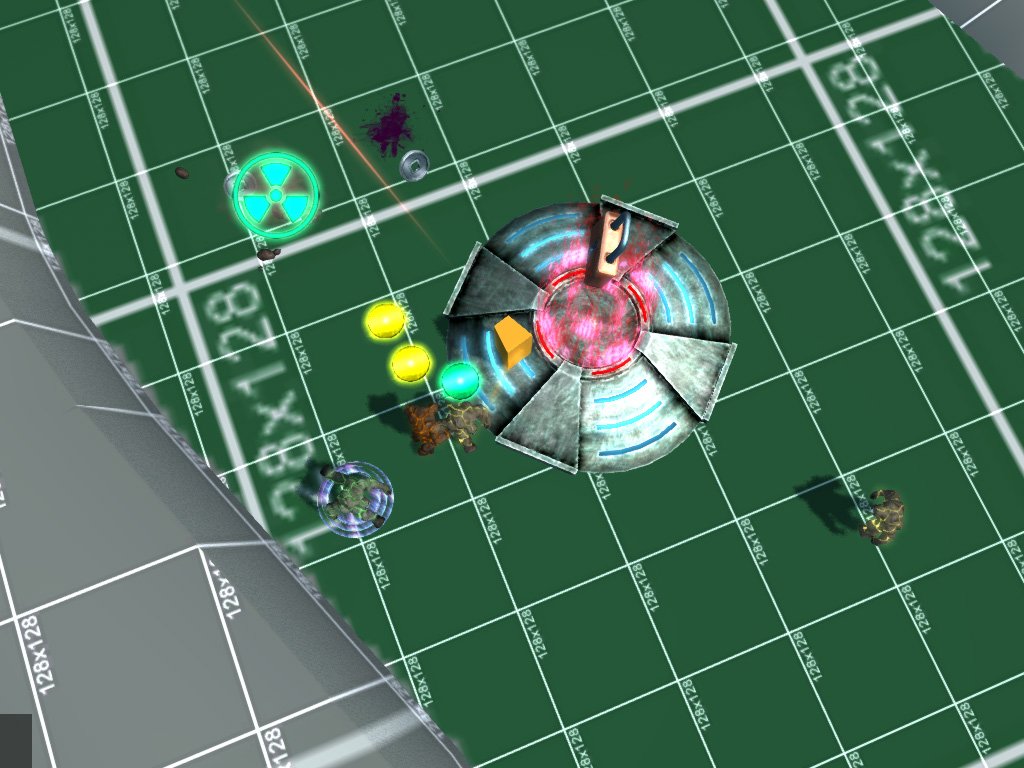
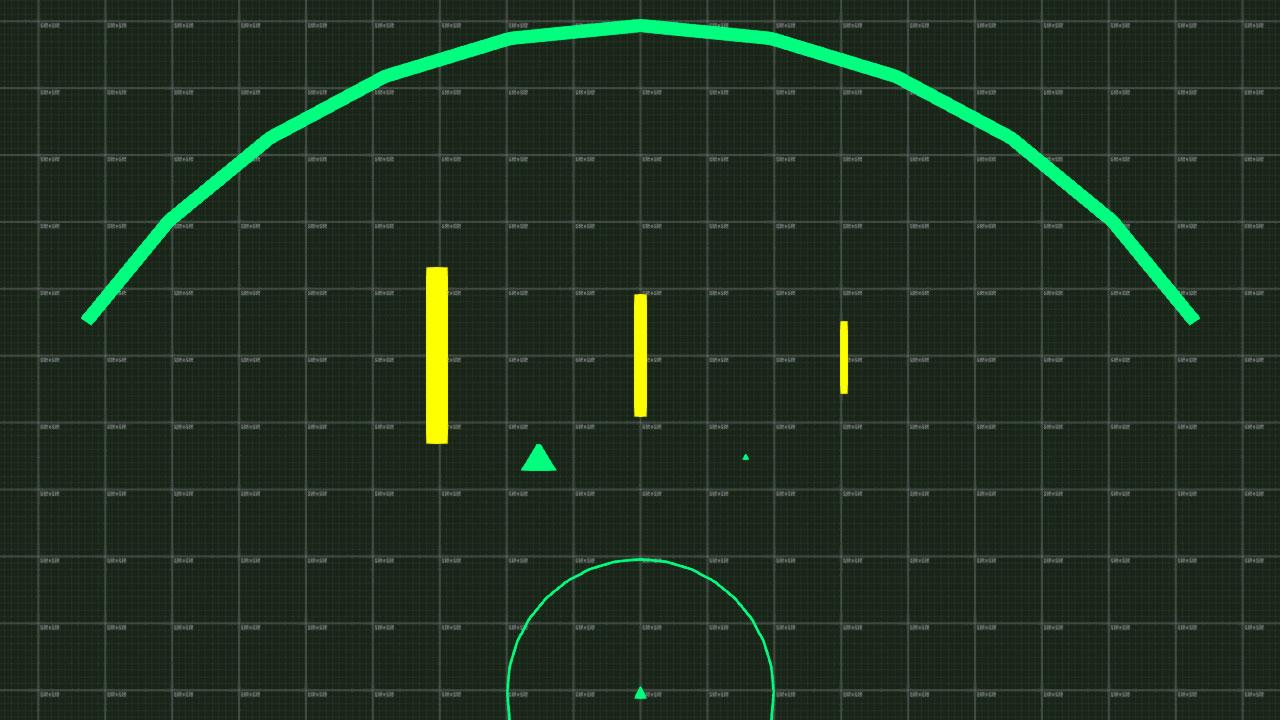
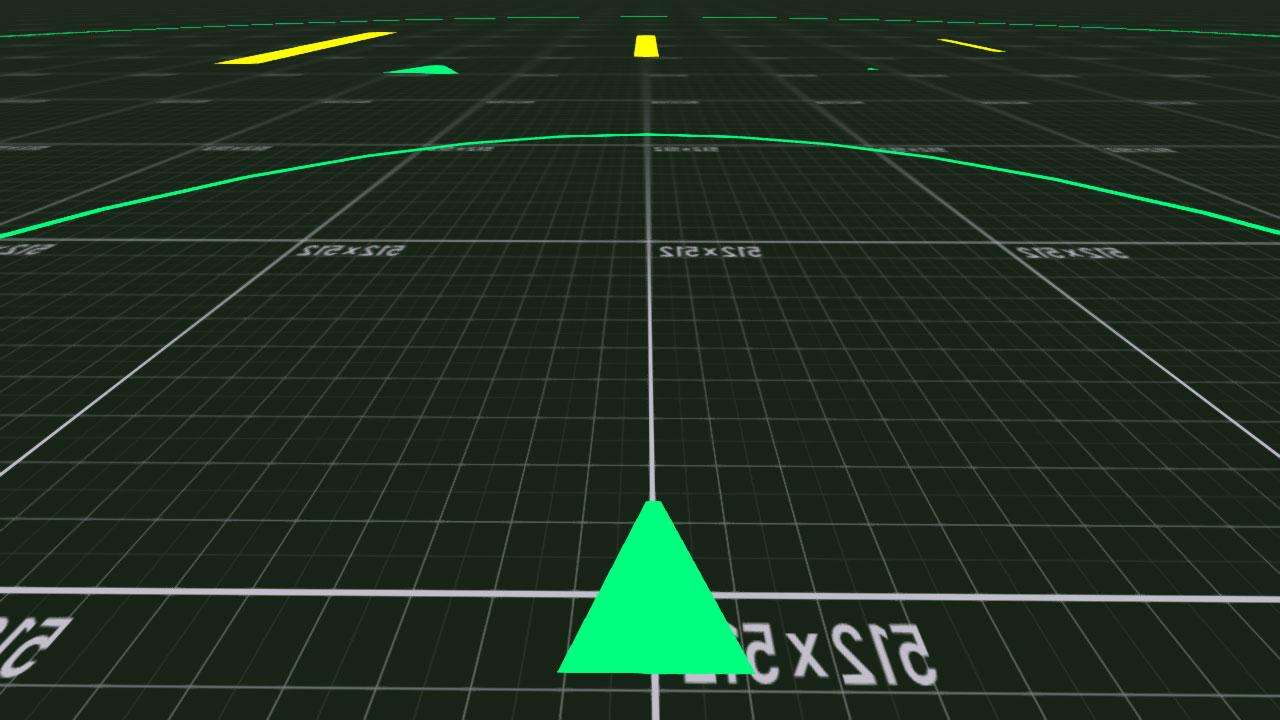
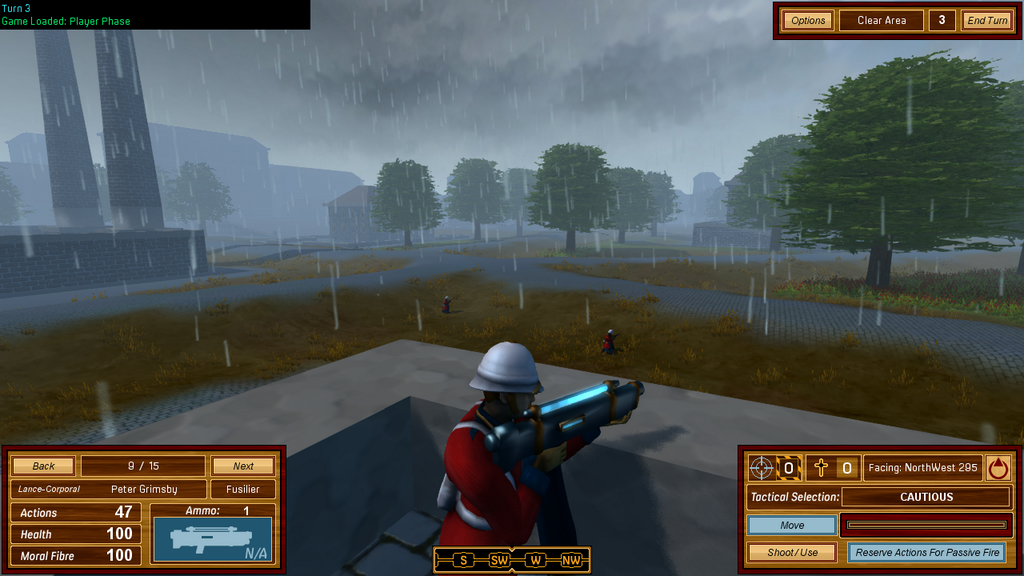
Airship Dragoon - walls now 0.2 world units lower!
Airship Dragoon has had a few fixes and tweaks since going up on Steam. I must say that Steam's updating system is great, literally pulling the changes from files and compressing them. I fixed an issue with the game not working on Windows XP, fixed a couple of strange bugs which had never happened before - and could not see what had caused them to happen now (fuuuuu-), and made a few general changes such as decreasing low walls by 0.2 units to make it easier to shoot over them.
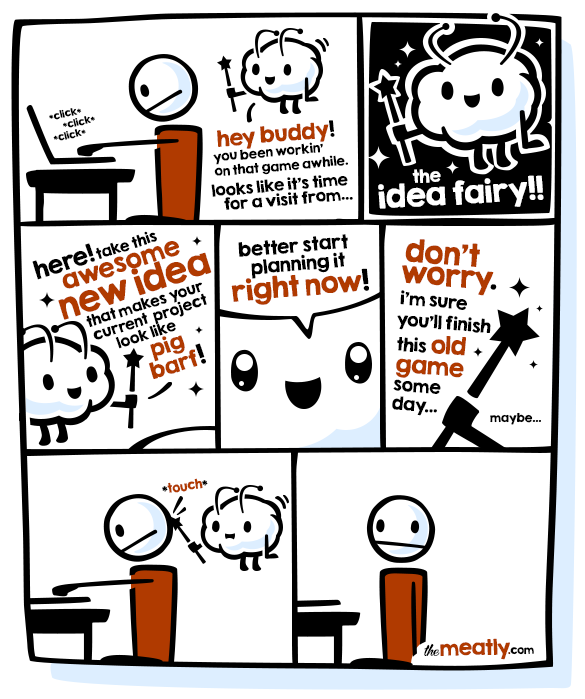
Whilst I have been updating and tweaking Airship Dragoon now that it's up on Steam, I have also been slowly doing the mental arithmetic of drawing up new game concepts for my next project. Frankly there have been a few ... a few thousand, because creative ideas and how to implement those concepts has never been an issue. Most get stored somewhere in the back of the memory banks whilst ones which are currently more interesting to my own whims and fancies, or seem to have greater viability are left to simmer in the subconscious at gas mark 3 (that's 160 Celsius / 325 Fahrenheit for those of you using electric brains). In the end, after much stewing, I narrowed it down to three ideas spread across three separate genres: Action, RPG, Adventure. And so, without any real screenshots, video or any actual visual reference for demonstration, I will attempt to explain my thoughts into some sort of coherent description which may or may not give a good understanding of what is bubbling away inside my head. CAUTION: TEXT AHEAD!
The Action Based Idea:
Concept:
Top-down steampunk/dieselpunk flight-sim/shmup with open-ended/branching narrative campaign.
Inspiration:
Descent Freespace (Volition 1998), Wings (Cinemaware 1990), Total Air War (DID/Infogrames 1998), World War 2 Pacific Naval/Carrier Battles
Outline:
Freespace bridged the link between arcade-action and simulation very well with it's simplified space flight model, and originally the idea was conceived as a steampunk/dieselpunk Freespace, set high above the clouds. However it didn't take long for me to decide that I really did not want to make a flight simulation, no matter how Freespace-like. So I thought about removing the Z axis completely and having a top down camera. Gravitating more to an action-simulation than a shoot 'em up as I've never been much of a shmup player due rubbish reflexes, a disdain of lots of flashing lights, low blood pressure and whatever the opposite of ADHD is.
Core Gameplay:
Sticking with many of Freespace's features, such as individually damageable locations, slowly recharging afterburners for sudden turns of speed (nitro fuel injection for the sake of naming in this case), and multiple aircraft types split into 3 main categories of interceptor/dogfighter/bomber with different engines (speed), aerilons (manoeuvrability), airframe/hull damage and armour (total hitpoints), and hardpoints for guns and rockets/bombs/torpedoes. All of which can be individually damaged to reduce their capacity, so hit an engine and overall speed drops, blast apart an aerilon and turning is reduced.
I would envision the ability to pull various evasive manoeuvres to avoid incoming fire on the 2D axis (xy top down) such as displacement roll/rolling scissors, high yo-yo/barrel roll and Immelman Turn. Each evasion would move the aircraft out of the line of fire (be invulnerable for a short time) and lose momentum depending on aircraft manoeuvrability and size of airframe (possibly allowing for the enemy to overshoot). Thus a small, high aeroloned (pretty sure that ain't a real word but considering what gets into the Oxford English Dictionary these days it hardly bears worrying about) dogfighter would be able to pull many more evasions than a large, poorly moving bomber. Drop speed below minimum and the aircraft stalls instead, spinning off with loss of control for a few seconds which should be enough for pursuing fighters to make Swiss cheese out of it. Bombs, rockets and torpedoes would have finite ammunition (only what you can carry) whilst MGs, 50 cals and 20mm cannons would have infinite rounds but with cool-downs.
I was thinking of having an aerial navy, hence the World War 2 Pacific Naval/Carrier Battles influence, but obviously replacing boats with airships and zeppelins, so once again somewhat like how Freespace saw it's own capital ships and cruisers. Each water navy type would have an aerial equivalent such as Carriers, Dreadnoughts, Cruisers, Destroyers, DD AA Escorts, Frigates, Corvettes and Freighters. All the big capital ships would be designed to fight each other with big guns, and thus find it difficult to defend themselves from smaller, faster fighters and bombers ("We count thirty Rebel ships, Lord Vader, but they're so small they're evading our turbolasers."). Throw in some sort of orbital/hovering installation to work as a sky bound airport.
Aircraft capability would be loosely based on a mixture of World War 2 equivalents and also Freespace's similar archetypes (light bomber, heavy bomber, etc). I am considering using a physics based formula for aircraft construction, each part having a certain weight and aerodynamic quality, more guns (heavy) increase firepower but reduce speed, more than aerilons (light) increase manoeuvrability with smaller speed loss but make the aircraft a larger target due to their additional size, armour is heavy which means a larger airframe and more drag, an extra engine adds x1.5 thrust not 2 because of it's own drag and the need for a larger airframe to accommodate it.
This is a quick concept I knocked up of a fast bomber based on a de Havilland Mosquito equivalent (air intakes probably need to go away). I was going to use it for a quick and dirty technical demo but then never had the opportunity/spare time.
Expanded Gameplay:
Campaign-wise I was thinking of something of a mixture between Wings and Total Air War, driven by player combat performance and off-duty player decisions.
Wings went through the whole of the First World War with one mission a week, inter spaced with news bulletins about the war, rumours around the airfield and of the historical aces of the time. New pilots would arrive to replace ones killed in action, for both Ai and the player, with survivors becoming familiar names in the squadron for the player.
Total Air War on the other hand had more player agency. Two African sides would square-up to each other, both backed by NATO/Soviet airforces. Missions would be randomly generated using an algorithm and the player could accept or decline them. Wiping our 3A made the skies safer for your own planes, as blasting airfields reduced enemy hostile potential. Players also had some command over airbourne jets and using an AWACs could divert assets to intercept.
I would envision multiple missions to select from, each with varying difficulties, the more challenging, the more likely the damage to enemy war effort in that sector. Do well get wider mission selection, do less well selection decreases. As the war rages new equipment and aircraft would become available. Many losses of these upgrades would cause a shortage in availability and mean falling back on inferior choices whilst the airforce restocked. The player's personal performance during missions would directly contribute to the direction of the war.
Like in Wings, there would be a between combat section, possibly displayed like a Visual Novel for interaction, where the CO or Ai pilots would have a chat, exchange rumours, post news, and the player might be able to request transfer to another unit which specialises in interceptors, fighters or bombers, thus giving more selectable missions to personal taste.
With interceptors, dogfighters, bombers, a wide range of variously capable zeppelins and floating airfields there should be a wide choice of missions. Straight forward reduce enemy numbers by dogfighting, intercept the bombers, attack the airships whilst fighters protect bombers and target, escort freighters and protect the supply lines, raid the supply dump, hunt the carrier, etc, etc. Also old fighter planes look really cool if you turn them into pushers with the propellers at the back.
After Thought:
This should be the quickest of my game ideas to complete ... allegedly ... and a faster turnover would be much appreciated after Airship Dragoon took nearly 3 years (mostly due to 3 rewrites ... which we won't be doing again).
Links to other peoples' artwork which might help give a better visual idea:
https://www.flickr.com/photos/25163007@N07/sets Lego!
http://linseed.deviantart.com/art/Further-Fictional-Airships-95199829
http://csp499.deviantart.com/art/Warhawks-Lusivakian-Airships-277978465
http://csp499.deviantart.com/art/Warhawks-Almenian-Airships-268368040
-----------------------------------------------------------------------------------------
The RPG Based Idea:
Concept:
Narrative based, isometric RPG set in an open world, using real time movement and possible stealth, turn-based melee combat with a steampunk and orientalist aesthetic.
Inspiration:
Various half-forgotten tactical RPGs ('90s), Suikoden Series (Konami 1995 onwards), Tactics Ogre (Square Enix 1995), Gunnm: Martian Memory (Yukito 1998), Shui Hu Zhuan / Outlaws Of The Marshes (Shi Nai'an 14th Century) aka All Men Are Brothers, aka The Water Margin, aka 108 Heroes Of Lang Shan Po, aka Suikoden
Outline:
Originally conceived as an open world, roaming brawler with a stealth option for sneaking past enemies. Having not actually played one since the heady days of coin-up arcades with Double Dragon and the like, I decided to take part in the 2014 Seven Day Roguelike Challenge (7DRL) and created a quick and dirty mock-up. With a working isometric camera, rudimentary controls, randomized level/maze generation (it was supposed to be a roguelike), a completely broken stealth mechanic but I was more interested in testing the action-combat idea here, I quickly came to the view that roaming brawler was not for me, as I do tend to favour more thoughtful turn-based combat over panicky button mashing.
Here's the post mortem of that 7 Day Roguelike Roaming Brawler.
http://yorkshirerifles.blogspot.co.uk/2014/03/the-7-day-roguelike-challenge-2014-post.html
At least it has the isometric camera view I am thinking of using.
The player moves around an open world in real-time from an isometric viewpoint, picking up missions from NPCs met on their travels, and using a mixture of stealth and turn-based combat to complete said missions. Successful completion grants XP/skills/power-ups/new attacks/etc. Some missions would be tied to each other, so if you have helped NPC X, it could help making NPC Y more benign later.
Core Gameplay:
Large open world which the player can traverse and explore as they see fit. Meeting various NPCs give the option of accepting missions. The player moves using standard real-time isometric movement (up, down, left, right) and can crouch for stealth and sneak through grass/bushes to avoid hostile NPCs. Moving very much in the same manner as Gunnm: Martian Memory (which I have never played, but I saw gameplay video and it was similar to what I had in mind).
Combat is initiated by getting close to an enemy at which point the action becomes turn-based. The enemy takes a stance (unless surprised/ambushed in which the player gets a free attack) which confers certain bonuses, and the player selects a fighting stance/first attack from those available, and then a follow up or a counter from another list. Choices would be a mixture of defensive and offensive manoeuvres. Combat is resolved asynchronously and if the opponent is still standing a new set of attacks and counters are presented for continuing combat (or fleeing if things are not going well). Think of it as an expanded rock/paper/scissors with additional modifiers. New stances, techniques, attacks can be gifted/taught to the player on successful completion of certain missions or by defeating certain stronger opponents (boss battles).
Extended Gameplay:
I mentioned Shi Nai'an in the inspiration section and his 14th Century telephone directory of a novel and one of the Four Great Classical Novels of Chinese literature. The story popularised the 108 heroes, and in gaming terms is probably best known as Suikoden. I came across the Water Margin when I was 4 (somethings I have a great memory for, whilst others, such as what day it is, do not seem so important) from the BBC2 version (1977) of Nippon Television's 1973 series (filmed on location in China ... during the Cultural Revolution ... must have been interesting for a Japanese film crew ... )which went out at 5.30pm and my mother let me stay up for. Though heavily cut for British tea-time audience and stuck on what was at the time the Beeb's arty channel, it still had plenty of claret splashing around, severed limbs and rape ... the latter not actually in the original book but you know what the Japanese are like (I'm surprised they didn't throw squid starspawn and a schoolgirl in there - or maybe they did and that was one of the bits cut for British TV), as our noble heroes battle government corruption to save the land. Thirty plus years later and I bought the box set on DVD, and a few years after decided to finally read the translation of the six hundred year old book. With 108 heroes being quite prominent in contemporary media culture (Tarantino, Suidoken, et al) I was somewhat surprised to find that their actions were not all that noble ... and that some of "their methods were unsound" ...
So I was thinking that as a narrative backdrop The Water Margin was rather interesting with a world in near anarchy and a corrupt governmental technocracy. Also working along the lines of Suidoken (which again, I have not actually player but read up on and seen gameplay videos of) where the player has to recruit the characters, I would envision the player completing 108 tasks, 108 achievements, and thus gaining 108 bonuses/upgrades/skills/etc. Missions would be structured with a difficulty setting based on how large the reward is and how much effort is involved. The hardest missions would be those which traversed large areas to complete with many dangers in the way - but I would make sure that there was never any doubling back, no fetch and return quests because only masochists like that sort of thing. I would hope that many missions would be solvable with a choice of stealth or combat. For example "steal the sacred sword/smexy lewt/McGuffin from the palace/guard house/temple of badasses" gives the option of beating seven bells out of everyone who gets in the way, or alternatively sneaking through the long grass, bushes to get inside and then hiding in the shadows to avoid patrolling enemies before quietly escaping.
The more open violence employed, the more infamous the player, and the more the authorities will take note of the player which would make freely moving around more difficult; "walks into town, walks past the jail with bored soldiers hanging around - hey is that my wanted poster? Oh shi-"
The world would be open, with the player free to decide which missions to take when. There would be a day and night system, the latter giving much larger bonuses for stealth and the likelihood of having less roaming hostiles, but more bandits, robbers and wild animals/possibly monsters outside of protected urbanised areas. Missions themselves could have a good range of variety and styles from as simple as lay flowers on a grave at close by location A, to obtain McGuffin B from the bandit mountain, to rescue BroDude C from the fort at location D, to defeat big bad BroDude E, and so on.
An aspect of moral choice could also be developed. If you kill the corrupt priest who spies for the government, then who looks after the orphans? Obtain vengeance for someone but they want their enemy's blood line destroyed, how far are you willing to go? To (roughly) quote from the novel, "Heaven's vengeance for murdering one is the same for murdering one thousand". The player would still get the achievement for completing the main part of the mission, but may not gain personal reward for either being overly violent or overlay passive.
I would consider having a save game system based around safe houses, so the player would find a pub, chapel, graveyard depending on location and be able to rest up, save the game, hide from enemies or fast forward time until sunrise or sunset.
After Thought:
There would be a fair bit of art required for this one as well as working out the many missions, 108 achievements is rather a big thing - but it definitely has to 108 or the reference does not work. If you mention Suikoden/108 Heroes people have a better understanding of where you are coming from. The rudimentary controls work as tested in the 7DRL except for the turn-based combat. I'd consider making the actual game world modular for ease of reusing assets and things such as trees are now quite easily created thanks to the glorious Forester Pro which can randomly generate them in a few clicks. Using isometric and camera distance could really reduce the amount of objects on screen at any one time, thus allowing for higher tris counts in localised areas without hammering performance. I might also consider lightmapping the whole thing rather than using dynamic shadowing and spend the savings on more complicated poly modelling.
No real image galleries to show on this one as it should be fairly self-explanatory.
------------------------------------------------------------------------------------------------------------
The Adventure Based Idea:
Concept:
Third-person survival horror and exploration game where the player can interact with the environment by jumping, climbing and shinning/dangling along ledges.
Inspiration:
Tomb Raider (Core/Eidos 1996), Amnesia: The Dark Descent (Frictional 2010), Dark Seed (Incentive/Cyberdreams 1992), Cthulhu Mythos (HP Lovecraft 1930s), Macabre Surrealism (HR Giger, Zdzislaw Beksinski, Wayne Berlowe, Sibylle Ruppert)
Outline:
Some years ago I replayed the start of original Tomb Raider and was struck by just how much the game left you alone. You could wander around, happily exploring to your heart's content without the game going out of it's way to force you to take part in the story. I was thinking along the lines of an adventure game where the player could scale certain vertical surfaces, jump across gaps/chasms, shin or dangle along ledges and generally free climb to explore the environment. Marrying this with the survival horror genre, the player would be unarmed and incapable of straightforward violence but could possibly leverage or knock over parts of the environment, whilst moving through ever more disturbing environments.
Core Gameplay:
The player explores, alone, unarmed and on foot. The emphasis is on environmental interaction and various surfaces throughout levels can be climbed. Often levels will have a puzzle element (usually just pathfinding) as a way of escaping them, though the prominence of the gameplay is on exploring. Thin ledges can be edged along or dangled off. Falling is generally considered bad.
Though this is survival horror, the stress is on the horror of macabre surrealism rather than a combat based threat. There would be certain times the player is directly hunted by creatures and have to escape via manipulating the environment or fleeing, but this would not be constant. More so the threat of bumping into something hostile whilst manoeuvring through increasingly disturbing aesthetics of each level would be key to building atmosphere and the sense of threat.
Extended Gameplay:
I am going to be a little coy about the narrative here, as the meat of a narrative based adventure is what happens in the story, and this is much more story specific than the other ideas so I intend to stick to explaining loose game mechanics. The game would start off in a contemporary timeline with the environments steadily becoming more and more horrifying. Along the way would be certain frescoes/statutes and the like which when activated would impart information via hallucination or actual animation depicting something to do with an alien narrative, somewhat akin to what happens in the story of HP Lovecraft's "At The Mountains of Madness" (1931) when the protagonist walks through the long dead city of the Elder Things. These objects would be supplementary to the main narrative. There would not be, under any circumstances, a game mechanic of find all of the scattered bits of paper someone had written notes on.
Apart from the exploration element there would be a certain amount of interaction with some physical objects such as pushing, shoving and knocking over, and it could be possible to treat these as weapons if done correctly.
The environments would be varied, with differing colour schemes. I much prefer artistically lit design for atmosphere rather than simple hard to see in darkness. I also prefer my horror to be subtly unsettling and build tension rather than opt for jump scares. Many scenarios would be about experience menacing rather than constantly running and hiding from it until it goes away and then attempting to move on again. Creature-wise, I am very much thinking along the lines of Lovecraftian nightmares, starfish alien, frightening abominations rather than the guy in a rubber suit concept. I am currently uncertain about having an "insanity" mechanic to the gameplay.
Whilst I thoroughly enjoyed Amnesia: The Dark Descent, I did find the ending weak ... what do you expect me to do, just sit there until the very last moment - which I'm not sure exactly when it will happen - whilst naked floating guy summons unspeakable evil, or wade in and stop him as soon as possible? To this effect I imagine multiple game endings based not only on direct and obvious choices the player makes, but also on how aggressively or cautiously they play the game.
After Thought:
This is probably the most creatively challenging of the three concepts, and annoyingly, probably the most commercially viable - though I am not really basing on that on anything concrete beyond the words horror, explore and Cthulhu tend to attract attention. It would require a lot of art, and a lot of that art would have to be custom/specific rather than more generic, and easier to create, models like mere rocks and trees. Whilst I have a big library of motion captured human animations, modelling and animating monstrous Things is another matter and one that I can see being very consuming. Rendering-wise, I am imagining it to be somewhat high poly (in dev terms), using a lot of tonemapping for shadowing and colour effect. Dispensing with dynamic lighting could save a lot on performance and thus really allow for some high tris environments.
Links to other peoples' Macabre Surrealist artwork which might help give a better visual idea. Viewing before going to sleep not recommended ;)
http://www.artgalleryartist.com/HRGigerart/index.htm
http://www.arts-wallpapers.com/galleries/zdzislaw-beksinski/index.htm
http://www.arts-wallpapers.com/galleries/wayne-barlow/index.htm
Sibylle Ruppert Google Image Search (can't find a decent web gallery of all of her work).
Macabre Surrealism Google Image Search.
And anything written by HP Lovecraft but I do recommend; At The Mountains Of Madness.
----------------------------------------------------------------------------------------------
So, those are the concepts which have been swimming around/festering in the back of my subconscious whilst I have continued to upgrade and fix Airship Dragoon. These three ideas are most viable of the many, many designs which form within the spongy bit between my ears, and constantly, incessantly, jockey with one another for position, and my attention.
Oh, omnipresent Idea Fairy, why will you not let me rest!? Oh, cruel Idea Fairy, a pox upon you!